Reading habits
Reading Goals for Adults: 25 Realistic Ideas to Make Reading Your Own
A reading goal can help you make time for books, explore a new genre, or enjoy the titles already waiting on your list. It does not need to be a race to finish more books. Here are 25 practical ideas for adult leisure readers and a simple way to choose a target that fits your life.
The short answer
- Choose a goal that matches why you want to read.
- Use a measure you can check, such as time, pages, books, or habits.
- Start from your recent routine and adjust the target to fit.
- Review the goal regularly and change it when your life changes.
What makes a good reading goal for an adult?
A useful goal starts with what you want reading to add to your life. Maybe you want a dependable break from screens, a little more time with novels, or a way to make progress on a long TBR. The best measure depends on that reason.
You can track finished books, pages, minutes, sessions, formats, or the kind of books you choose. A count is easy to understand, but it can leave out short reading sessions, audiobooks, rereads, and books you decide not to finish. Pick a rule that feels fair to you and keep using it consistently.
25 realistic reading goal ideas
Treat these as a menu. Choose one goal that sounds enjoyable, or pair one outcome with one small habit. You do not need to try all 25.
Set a comfortable reading pace
- Choose a book-count target. Look at your recent pace and pick a number that feels possible, such as 10 books over the next 12 months.
- Read one book a month for a season. Try this for three months, then decide whether the rhythm suits you.
- Set a monthly page target. Pick a round number that fits your week, such as 500 pages over a month.
- Make progress on one long book. Read 10 pages on five days each week until you finish the book.
- Mix short and long books. Choose three shorter reads to enjoy between longer books over the next few months.
Make room for reading in adult life
- Read after breakfast. Set aside 15 minutes on three mornings each week.
- Take a book with you. Keep a paperback or ebook ready and read during two waiting periods each week.
- Protect one weekend session. Schedule a relaxed 30-minute reading window on a day off.
- Read before bed. Try 10 pages before sleep on three nights a week, if it helps you unwind.
- Listen while you move. Try an audiobook during a regular walk or commute twice a week.
Explore books beyond your usual picks
- Try three new genres. Pick one unfamiliar genre every four months and see which, if any, you want to read again.
- Read two translated novels. Choose books translated from languages you do not read yourself.
- Meet three new-to-you authors. Choose one author every other month, without needing to finish a whole series.
- Try a new format. Finish one book of poetry, short stories, comics, or audio if you do not usually reach for that format.
- Alternate fiction and nonfiction. For your next six books, switch between a story and a subject you are curious about.
Enjoy the books already on your list
- Read four books you already own. Pick titles from your shelves before buying or borrowing more.
- Borrow six books from a library. Use the library for a new author, a book you are unsure about, or a format you want to sample.
- Continue a series you enjoy. Read the next book in a series you have already started, then decide whether to continue.
- Finish six titles from your TBR. Choose the titles you are most curious about now, not the oldest ones by default.
- Refresh your TBR once a month. Remove one title that no longer interests you and add a new one only when you want to.
Remember and share what you read
- Write five short reading notes. After five finished books, save one sentence about what you want to remember.
- Save a few favorite quotes. Record one passage from three books, along with its page or location.
- Reread a favorite. Choose one book you loved and notice what feels different this time.
- Share one recommendation each month. Tell a friend what you liked about a book, even if your opinions differ.
- Keep a log for 12 weeks. Track each book's title and finish date, then review which details you found useful.
A simple way to set a realistic reading target
Start with a goal you can check, then fit it around your actual week. This five-step process can work for a book count, reading time, pages, or a change in what you read.
- Name the reason. Choose one outcome you care about, such as a calmer evening routine, more variety, or time for a particular book.
- Pick a measure. Use something visible, such as books finished, pages read, sessions per week, genres tried, or minutes spent reading.
- Check your starting point. Look at your recent reading without judging it. Set a small increase if you want a stretch, or keep the same pace if consistency is the goal.
- Choose when it will happen. Attach the goal to a routine you already have, such as after breakfast or during a regular commute.
- Review and adjust. Check in every month. Keep what is working, change what is getting in the way, and make room for slower seasons.
A flexible example
Make time for reading without rushing through books
- Reason
- Have a relaxing evening activity
- Goal
- Read for 15 minutes on three evenings each week
- Starting point
- One or two short sessions in a typical week
- Review
- After six weeks, keep, lower, or change the routine
The measure is the reading time, not the number of books completed. If a busy week interrupts the routine, begin again when it suits you.
Track progress in a way that helps
A calendar mark, a notebook, a spreadsheet, or a reading tracker can show how often you read and whether your target still fits. Keep only the details you want to review. If a total starts to feel like pressure, switch to a habit or exploration goal instead.
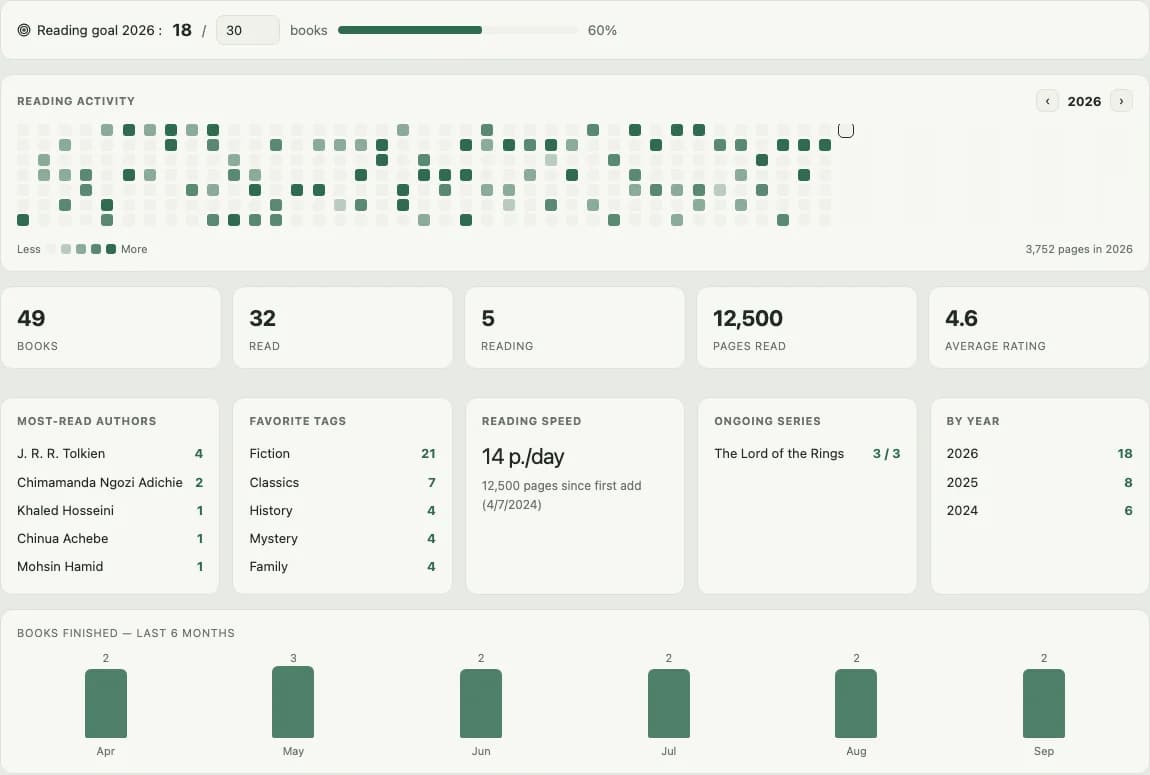
Inkshelf's statistics can show a yearly book goal, reading activity, completed reads, and pages. A completed reread counts as another reading event in the annual total. The goal is optional, and the history works without setting one.
If you are still choosing a system, our guide to tracking the books you read compares six ways to keep a history. For ideas on what to read next, see the guide to building a TBR list.
Common questions about reading goals
How many books should an adult read in a year?
There is no single right number. Look at what you have read recently and choose a target that leaves room for the length and kinds of books you enjoy. A time or habit goal can be a better fit if a book count feels restrictive.
What is a realistic reading goal?
One you can make space for in your current routine. For example, if you read once or twice a week now, try adding one short session rather than planning for daily reading immediately.
Should audiobooks count toward a reading goal?
You decide what your goal measures. If the goal is to finish stories or explore books, you can include audiobooks. If you are measuring pages, record listening separately or choose a time-based measure.
What if I miss my reading goal?
Review whether the goal still fits your life. Lower the target, choose a different measure, or pause it. You do not need to make up missed sessions or finish a book you no longer want to read.
How can I make a reading goal easier to keep?
Choose a specific time or situation, keep your next book easy to reach, and make the first step small. Review the routine monthly instead of judging each day in isolation.
Let your reading goal fit your life
Start with why you want to read, then choose one measure and a small routine. Whether you track books, pages, time, or new experiences, a goal should make it easier to enjoy reading. Change it when your circumstances or interests change.
Set and track a reading goal in Inkshelf
See your reading activity and completed books alongside your personal library.
Start tracking my reading